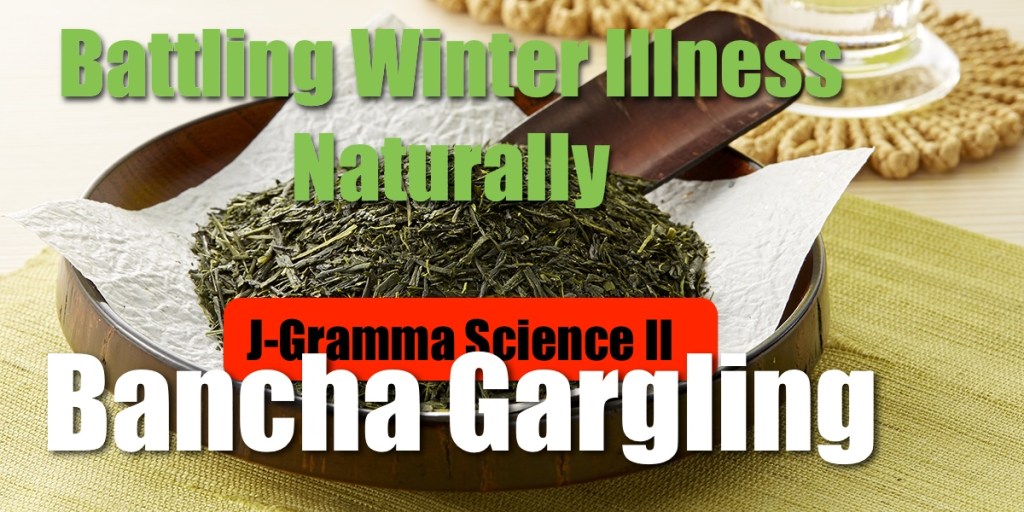
When I caught a cold, my grandma had another tried-and-true remedy: “Bancha gargling.”
“Bancha” translates to “coarse tea” or “common tea” in English. It refers to a type of Japanese green tea made from the later harvest or coarser leaves of the tea plant. Bancha is known for its mild flavor and lower caffeine content compared to other green teas. It is a popular and affordable everyday tea in Japan.
The term “Bancha (番茶)“ seems to originate from the idea of “extra tea (番外茶)“ encompassing varieties that don’t fit into the conventional tea categories. There are two main types:
1. “Ichiban-cha”: The first-picked tea, either hand-plucked or collected after the initial bud, ensuring high quality. (Technically called “I-chi-ban”)
2. “Aki-Fuyu Bancha”: Tea leaves left to grow without picking after the third harvest, picked in autumn, and is the most abundant in quantity. (Technically known as “Aki-Fuyu ‘Fall/Winter’ Bancha”)
We commonly enjoy the widely available “Aki-Fuyu Bancha.”
Now, does gargling with this Bancha genuinely prevent a cold? Is there any scientific basis behind Grandma’s wisdom?
As many may know, tea contains a significant amount of “Catechins.”
Catechins, renowned for their beauty benefits, wield formidable powers in terms of antioxidants, antibacterial, and antiviral properties.
The antibacterial potency of catechins is striking, demonstrated in reports where green tea extract eradicated E. coli (O157) within 24 hours.
Regarding viruses, studies suggest that catechins close the spikes binding to cells, making it difficult for viruses to infect cells. Tea rich in catechins, therefore, emerges as a potent ally in preventing colds and influenza.
Notably, Bancha contains more catechins than green tea, and its lower caffeine content allows for more consumption without worrying about excess caffeine intake.
Adding a pinch of natural salt creates “Salted Bancha,” gaining a synergistic effect with the antibacterial properties of salt.
The discovery of catechins’ antibacterial, germ-killing, and antiviral properties is relatively recent, just about 40 years ago.
How did Grandma know all this?
So, sipping Bancha frequently and gargling with it, especially when it cools down, seems scientifically reasonable for preventing and alleviating colds and the flu.
[Worth thinking…] Gargling with chemical based solutions vs. Catechins
Besides some side-effects, my concerns about chemical disinfectants like povidone-iodine in commercial gargling solutions stem from their excessively strong germ-killing action, affecting not only harmful bacteria but also the beneficial microorganisms (microbiome) inside the mouth and body. These microbiomes protect against external invaders, contributing to immune function. Viruses often invade through the throat, so weakening the body’s natural defenses by eliminating oral resident bacteria might increase vulnerability. In my case, I turn to Bancha for prevention or at the onset of a sore throat and switch to commercial gargling solutions if symptoms worsen with swelling and fever.
This approach applies to excessive disinfection, including alcohol-based sanitizers, bleach, and chlorine-based detergents. Cleansing hands or the body with these chemicals kills not only external bacteria but also wipes out the beneficial microorganisms, potentially making it easier for bad actors to invade the body. I’ll delve into this topic on another occasion.
 LIVE YOUR BEST