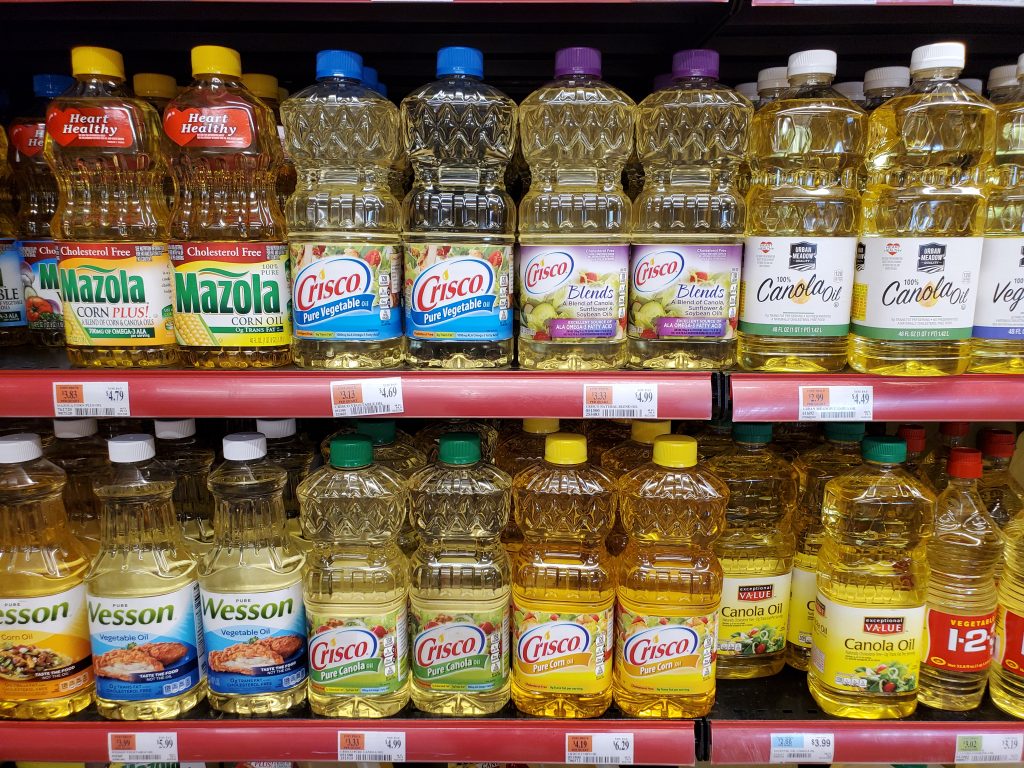
Our cell membranes are primarily made up of fats, and the fats we consume play a crucial role in their structure and function. The cooking oils we use daily significantly impact our health.
Common Cooking Oils Found in Kitchens
Many widely used cooking oils come from plants and seeds, including:
- ❌Corn oil
- ❌Canola oil (a genetically modified rapeseed oil with reduced erucic acid, known to affect heart health)
- ❌Soybean oil (one of the most common and inexpensive oils, often blended due to its strong odor even after refining)
- ❌Sunflower oil
- ❌Safflower oil
- ❌Peanut oil
- ❌Grape seed oil
- ❌Hemp oil
- ⚠️Sesame oil
- ⚠️Rice bran oil (highly processed and rich in omega-6)
(❌ Get rid now. ⚠️ Reduce use)
In Japan, Most commercial vegetable oils do not disclose their exact composition. Labels such as “vegetable oil” or “salad oil” often indicate a blend of corn and soybean oils, making them a mystery mix of ingredients.
How Vegetable Oils Cause Inflammation

Chronic inflammation is a root cause of modern diseases such as heart disease, diabetes, obesity, acne, cancer, asthma, autoimmune disorders, and arthritis—conditions that were rare or even unheard of just a century ago.
Why Do Vegetable Oils Trigger Inflammation?
- High in Omega-6 Fatty Acids
- Contain More Polyunsaturated Fats (PUFAs) Compared to Monounsaturated Fats
- Highly Processed and Refined
- Often contain trans fats
- Frequently made from genetically modified ingredients (e.g., corn and canola oils)
Omega-6 Fatty Acids and Inflammation
Most vegetable oils are rich in omega-6 fatty acids, particularly linoleic acid. Omega-6 itself is not inherently bad, but the key issue is its imbalance with omega-3 fatty acids. Historically, humans consumed omega-3 and omega-6 in a balanced ratio of 1:1. However, modern diets—laden with processed foods and poor-quality vegetable oils—have pushed this ratio to 1:14 or even 1:25 in Western countries.

Japan’s traditional diet, which included omega-3-rich fish and minimal fried foods, maintained a healthy omega-3 to omega-6 ratio of around 1:1 to 1:4. However, the westernization of Japanese diets and increased consumption of processed foods and restaurant meals have shifted this balance to about 1:10 to 1:15—still better than the West but high enough to contribute to inflammation-related diseases.
How Omega-6 Affects Mitochondrial Health
Dr. Chris Knobbe, a leading researcher on vegetable oils, presented findings at the Ancestral Health Symposium showing how an imbalance of omega-6 damages mitochondria. Omega-6 disrupts cardiolipin, a crucial component of mitochondrial membranes, leading to proton leakage. This leakage prevents ATP (our body’s energy currency) production, ultimately impairing cell function and energy metabolism.
Our bodies rely on energy to repair and recover from daily stressors. When mitochondria are damaged, our ability to heal declines, making us more vulnerable to chronic diseases.
The Danger of Polyunsaturated Fats (PUFAs)

PUFAs are highly unstable fats, particularly prone to oxidation. Each type of fat has a specific oxidation threshold, and PUFAs oxidize at very low temperatures. This oxidation leads to the formation of free radicals—highly reactive molecules that damage cells. Internally, this manifests as organ and gland damage, while externally, it accelerates skin aging.
How Processing Makes Vegetable Oils Worse
Many vegetable oils undergo extensive refining:

- Solvent Extraction: Hexane, a gasoline component, is used to extract oil. It is a neurotoxin linked to nerve damage, muscle weakness, blurry vision, headaches, and fatigue.
- Chemical Treatment: Caustic soda (sodium hydroxide) is added to prevent rancidity.
- Deodorization: High heat (over 200°C) removes natural flavors but promotes the formation of trans fats and oxidation.
- Bleaching: Bleaching clay or activated charcoal is used to strip color.
These refining processes remove beneficial nutrients like vitamin E, polyphenols, and antioxidants, while simultaneously oxidizing unstable PUFAs, further exacerbating the omega-6 to omega-3 imbalance.
Synthetic Additives in Processed Oils
To extend shelf life, manufacturers add synthetic antioxidants:
- BHA (Butylated Hydroxyanisole)
- BHT (Butylated Hydroxytoluene)
- TBHQ (Tertiary Butylhydroquinone)
These chemicals act as endocrine disruptors, interfering with hormone function. TBHQ, in particular, has been linked to immune dysfunction.
The Bottom Line

The extensive processing, high omega-6 content, and instability of vegetable oils make them a significant contributor to chronic inflammation and modern health issues. If you want to avoid premature aging, heart disease, diabetes, autoimmune disorders, and other chronic illnesses, start by eliminating or at least reducing these oils from your diet.
You may be wondering, “What oils should I use instead?”
Stay tuned—we’ll explore the best options in the next article!
Subscribe to “Live Your Best”, your go-to source for comprehensive information to guide you on the path to a healthier life. Drawing from my expertise as a certified Health Coach and insights from practices such as Shiatsu, Taichi-Chen, and Daoism, I will share my discoveries for health and longevity in unconventional ways.
Note: Please be aware this blog system default language is set to Japanese, the notification email you will receive may be Japanese BUT the contents are all in English.
 LIVE YOUR BEST