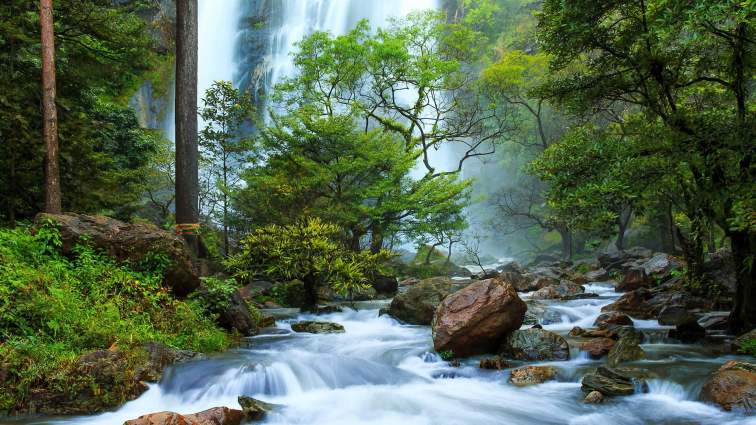
The concept of ‘being natural’ is something we often hear, but let’s delve a little deeper into what it means.
You may be familiar with the Zen monk known as Hakuin. I remember an anecdote about him: ‘One day, a woman came to the Zen temple holding a baby and said angrily, ‘This baby is yours, so take care of it!’ Hakuin didn’t recognize the baby at all, but he replied, ‘I see, I understand,’ and took the baby. After a year or two, the same woman came back and shouted, ‘Give me back my child; it’s not yours!’ Hakuin calmly said, ‘I see, I understand,’ and returned the child to her as if nothing had happened.’
This story perfectly illustrates the idea of going with the flow, not resisting the natural course of events, and not acting with contrivance.
Zen Buddhism, having its roots in Taoism, shares fundamental principles with Taoism. It is about living in a state of ‘naturalness’ and ‘unintentional randomness’ without going against the Tao. Furthermore, it resonates with the idea expressed in Vedanta, an Indian philosophy, that ‘a flower blossoms beautifully without any effort, and a bird flies gracefully through the sky without striving.’
Lately, I have encountered this concept of ‘naturalness’ many times within the practice of Tai ji Chen. In Tai ji Chen, the most important aspect at the beginning is the alignments of the body’s structure, including bones, muscles, and tendons. Therefore, we spend time in the ‘Wu Ji’ stance, which means the “Ultimate Nothingness” position for the body. This ‘Wu Ji stance’ can be summarized as relaxing and surrendering to gravity, allowing the body to naturally align itself. It requires no imagination or intention, only an awareness to be soaked into the body. It is said that true effectiveness is achieved through this state of unintentional naturalness.
Another practice in Tai Chi called ‘Push Hands’ is a training method where one synchronizes their nervous system with that of the partner, becoming one and manipulating the partner as an extension of oneself. This practice embodies the idea of making others become oneself, achieving Oneness, and once again, it exemplifies the naturalness.
Incidentally, Tai Chi is a physical embodiment of the Taoist concept of ‘being natural.'”
 LIVE YOUR BEST